
Ruth used to hide her feet.
Now she soars.
She was 10 years old, working barefoot in the fields, caring for her siblings while her mother lay paralyzed. Jiggers spread through her whole family. Every step hurt. Then Sole Hope showed up. Today Ruth runs, plays, and goes to school. Your gift makes that possible for the next Ruth.
Most of the world has
never heard of one.
That's part of the problem.
A jigger is a tiny sand flea. It burrows into bare feet, feeds on blood, and lays hundreds of eggs under the skin. Without treatment, the infection spreads, destroys tissue, and makes walking unbearable.
The physical pain is only part of it. In rural Uganda, jiggers carry a heavy stigma. Families are labeled cursed. Children are kept from school. An infection becomes an identity. Your support breaks that cycle.
It spreads in soil
Children who walk barefoot on dirt floors or outdoor paths are most at risk. One infected person can spread jiggers to an entire household.
One treatment is not enough
Without protective shoes and ongoing care, reinfestation is almost certain. The cycle repeats until someone intervenes consistently.
It is completely preventable
Closed-toe shoes, basic hygiene education, and access to medical care are enough to break the cycle entirely. This is a solvable problem.
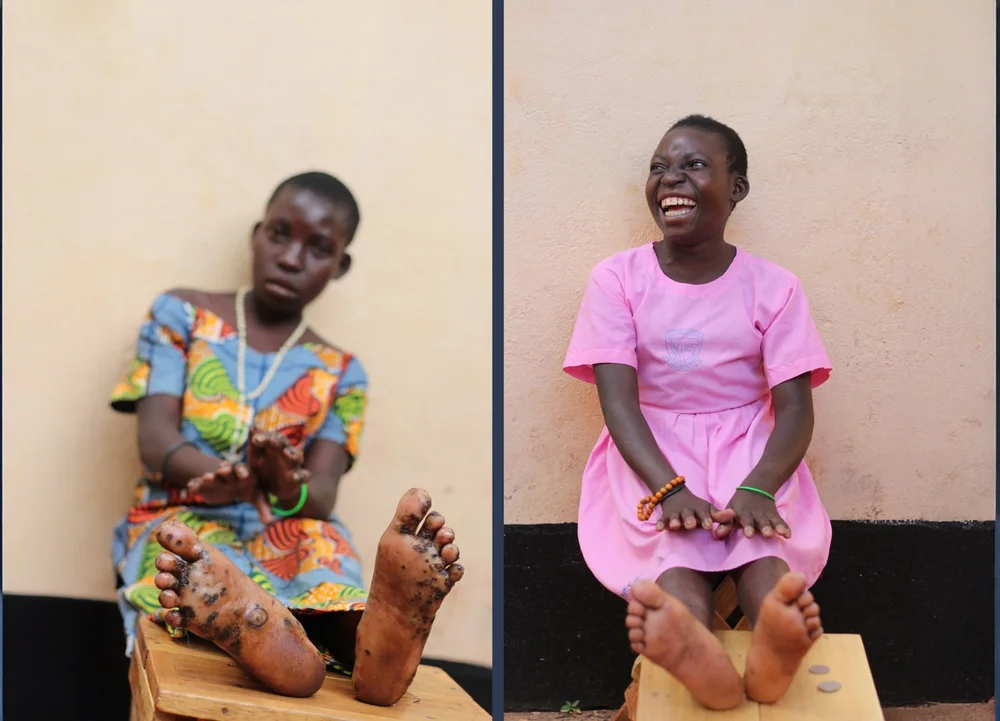
Joy, age 13. Her village called her cursed. Her team called her by name.
Four programs.
One goal.
Zero jiggers.
When you give to Sole Hope, your dollars move through a full care pathway. From the moment our team enters a village to the day a child walks home in new shoes, your support makes every step possible.
This is not a service menu. It is a movement. And every dollar you give keeps it moving.
Reach: Mobile Medical Clinics
Your gift sends teams into villages and schools weekly. Treatment, education, and shoes go directly to families with no other access to care.
Scale: Walk In Freedom Clinics
You help embed jigger care inside existing government health centers. Sustainable, locally owned, and expanding across Uganda and into Kenya.
Heal: Brighter Days
You fund mental health care for those whose wounds go deeper than feet. Trauma and shame treated alongside the infection.
Protect: Shoemaking
You put shoes on healing feet and create jobs for Ugandan families. Denim cut in communities, finished by local craftspeople.
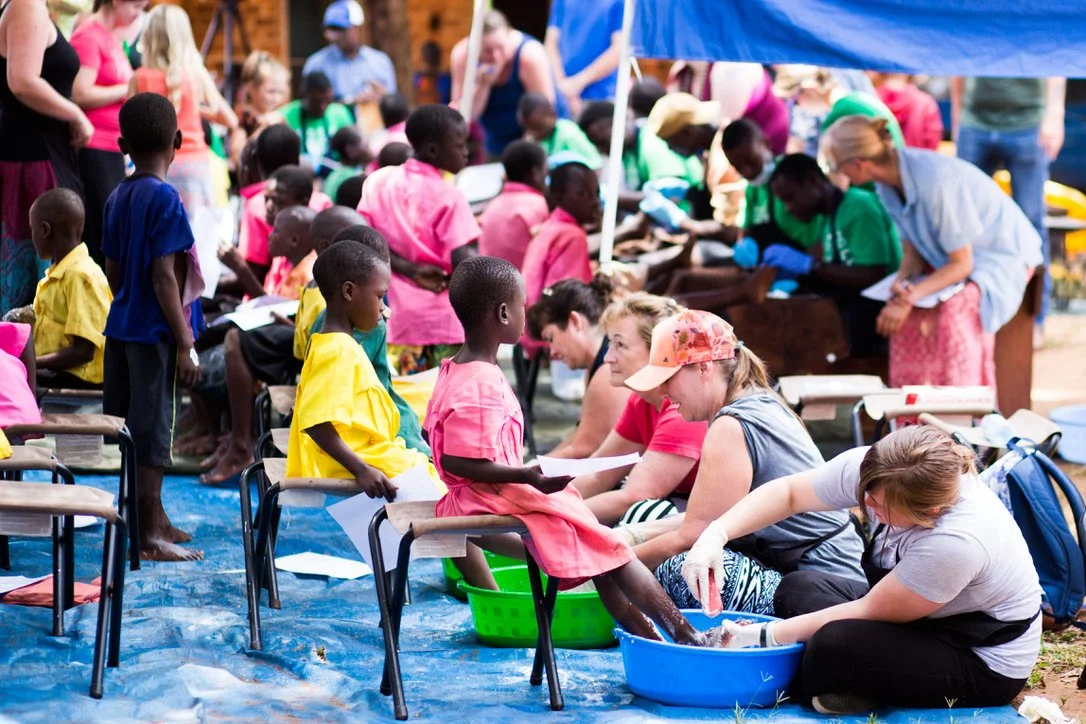
When the clinic can't come to them, we do.
Many families live miles from the nearest health facility. They are not going to come to care. So your gift sends our teams to them.
Every week, Sole Hope's mobile teams travel to villages and schools. They wash feet, remove jiggers, treat infections, teach families how to prevent reinfestation, and fit every patient with protective shoes before they leave. Then they come back. Because consistency is what breaks the cycle.
Learn more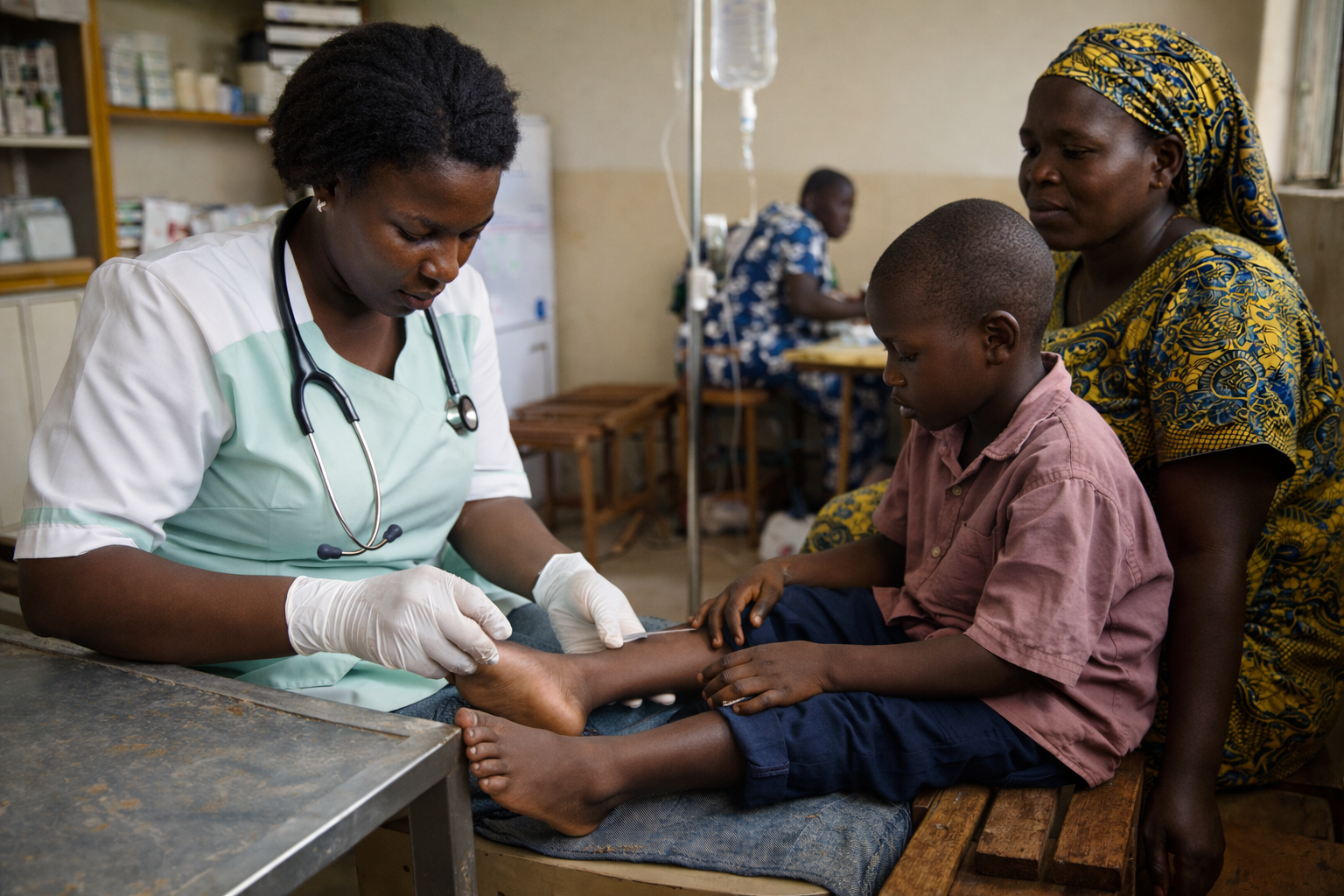
Inside the facilities communities already trust. Built to outlast us.
Sole Hope does not build new facilities. We go inside the ones already serving communities. We train local staff, equip the space, and create a dedicated jigger treatment pathway. When Sole Hope eventually steps back, the care continues because local people own it.
In the Busoga region, many communities have now reached zero jiggers. Your support carries that progress across Uganda and into Kenya.
Learn more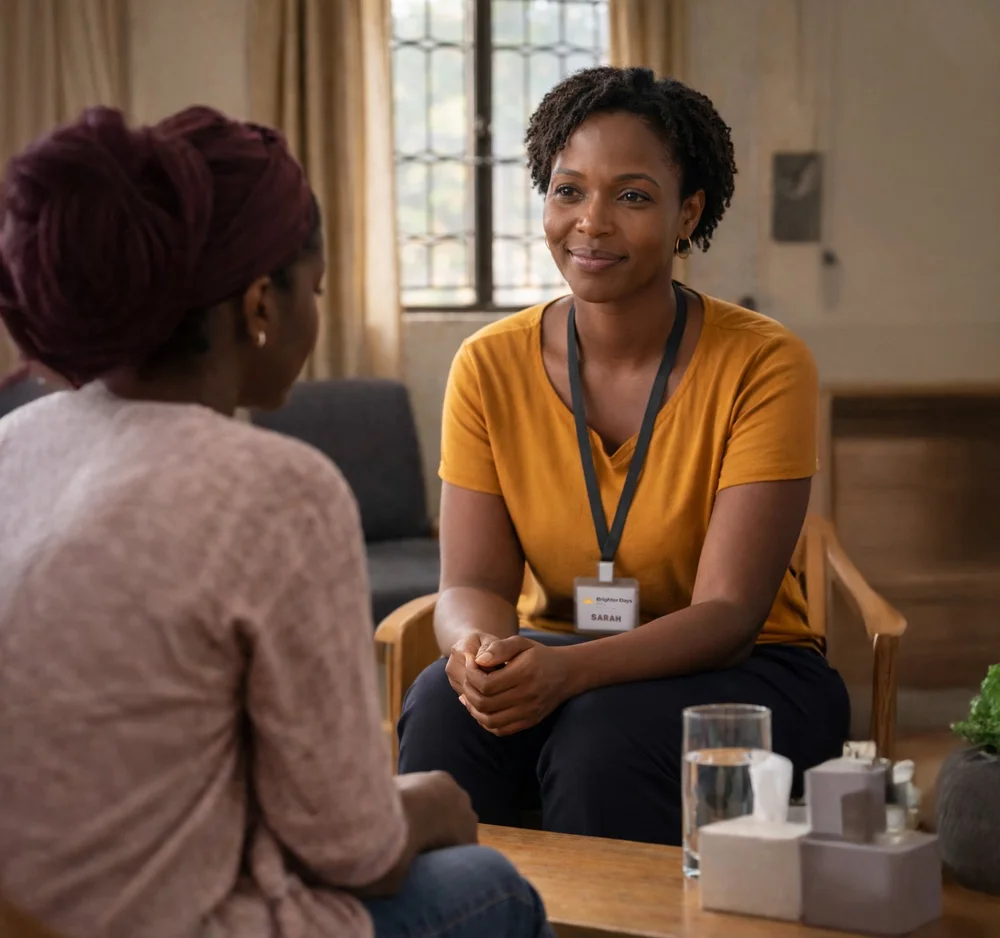
Treating the feet is not always enough.
A child who was called cursed does not stop believing it just because the infection is gone. Jiggers leave wounds that medicine alone cannot reach.
Brighter Days provides mental health care, trauma counseling, and addiction recovery support alongside medical treatment. Your gift helps heal the whole person, not just the feet.
Learn more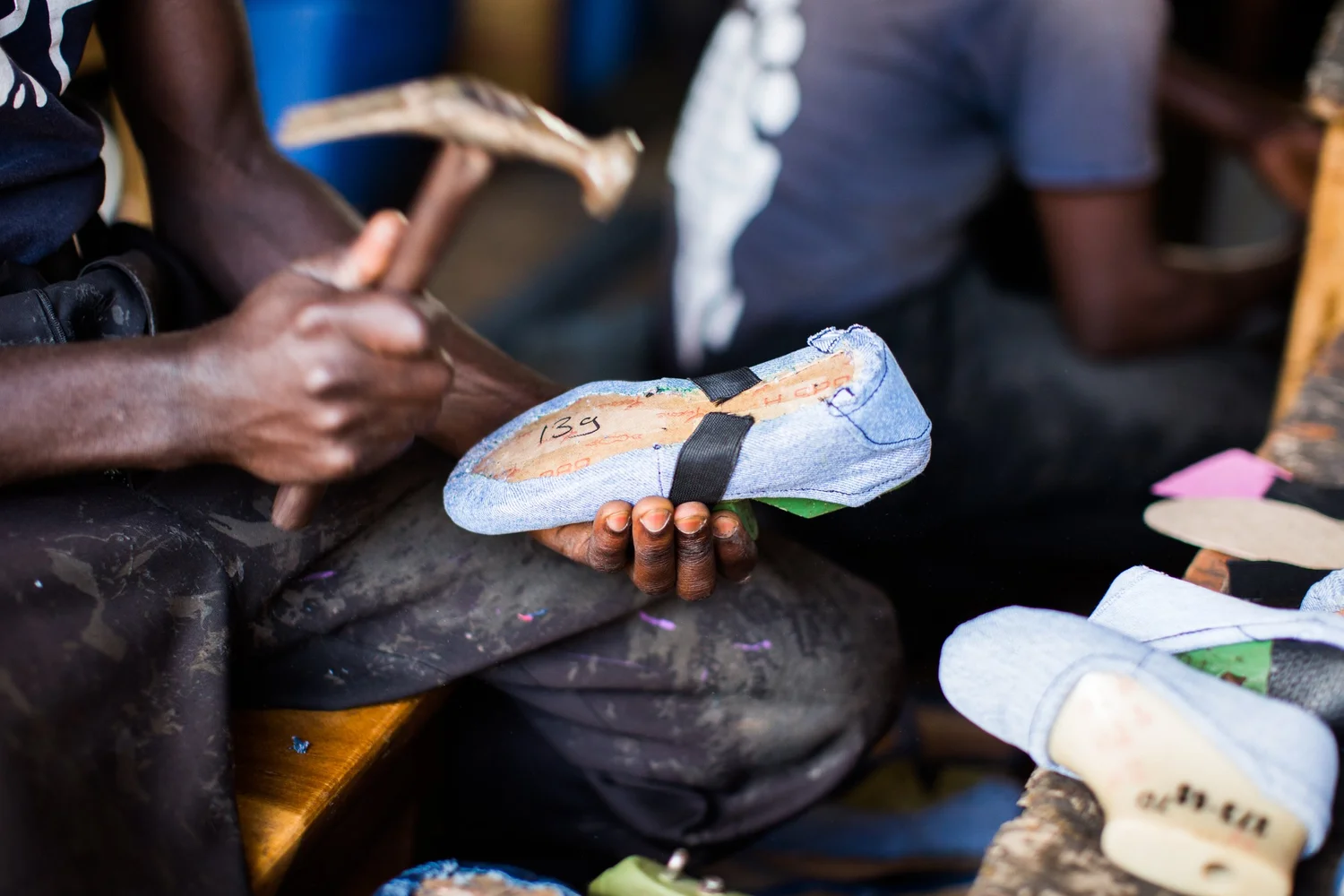
From your hands to their feet. Protection and purpose.
Every pair of Sole Hope shoes starts with communities cutting donated denim. Those patterns ship to Uganda, where local craftspeople finish each pair with recycled tire soles.
Closed-toe shoes are the single most effective way to prevent reinfestation. Your support protects healing feet and creates steady employment for Ugandan families at the same time.
Learn more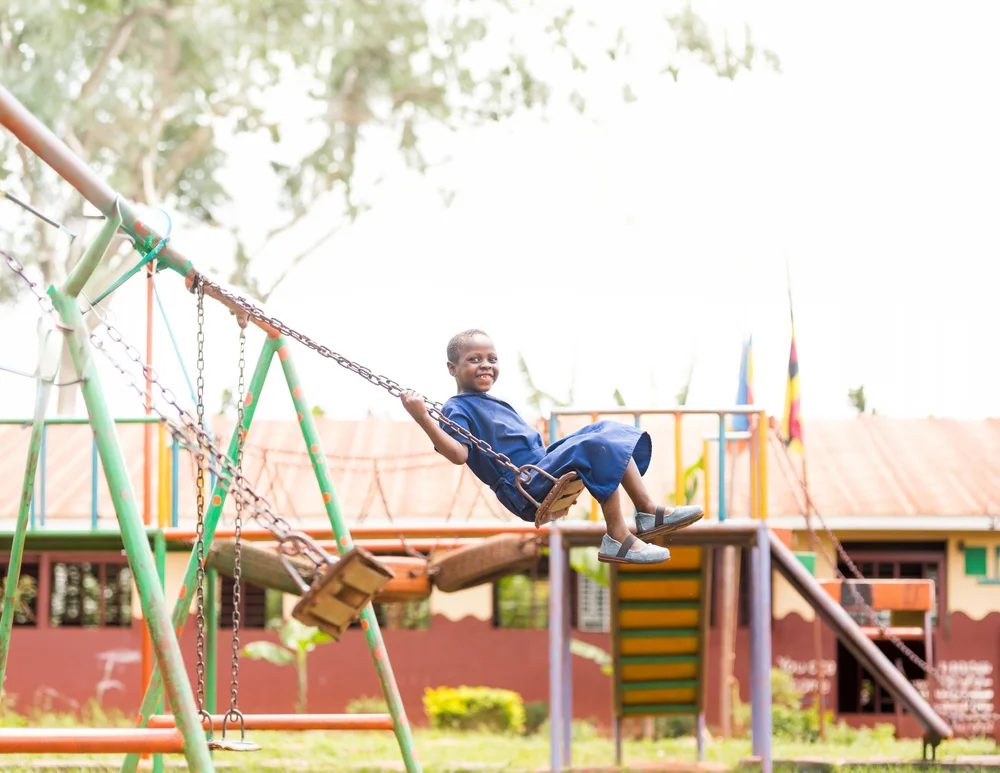
She came in hiding.
She left soaring.
Ruth's feet healed at the Hope Center. Then something else happened. She rediscovered childhood. Jumping rope. Singing. Playing soccer. She went home with shoes, with knowledge, and with a future that felt possible again.
Today Ruth swings high, dreaming of brighter days. There are thousands of children just like her still waiting. Your gift is what changes that.

You decided a child in Uganda
was worth showing up for.
That changes everything.
The next Ruth
is waiting.
You can be the reason.
Every clinic, every treatment, every pair of shoes exists because someone like you decided to give. Your gift today keeps the teams moving and the mission alive.
Zero jiggers. Nothing less. Everyone walking free.